How to design a nursery for a newborn.
Six design decisions to make before choosing the cot, the changing table and the colours.
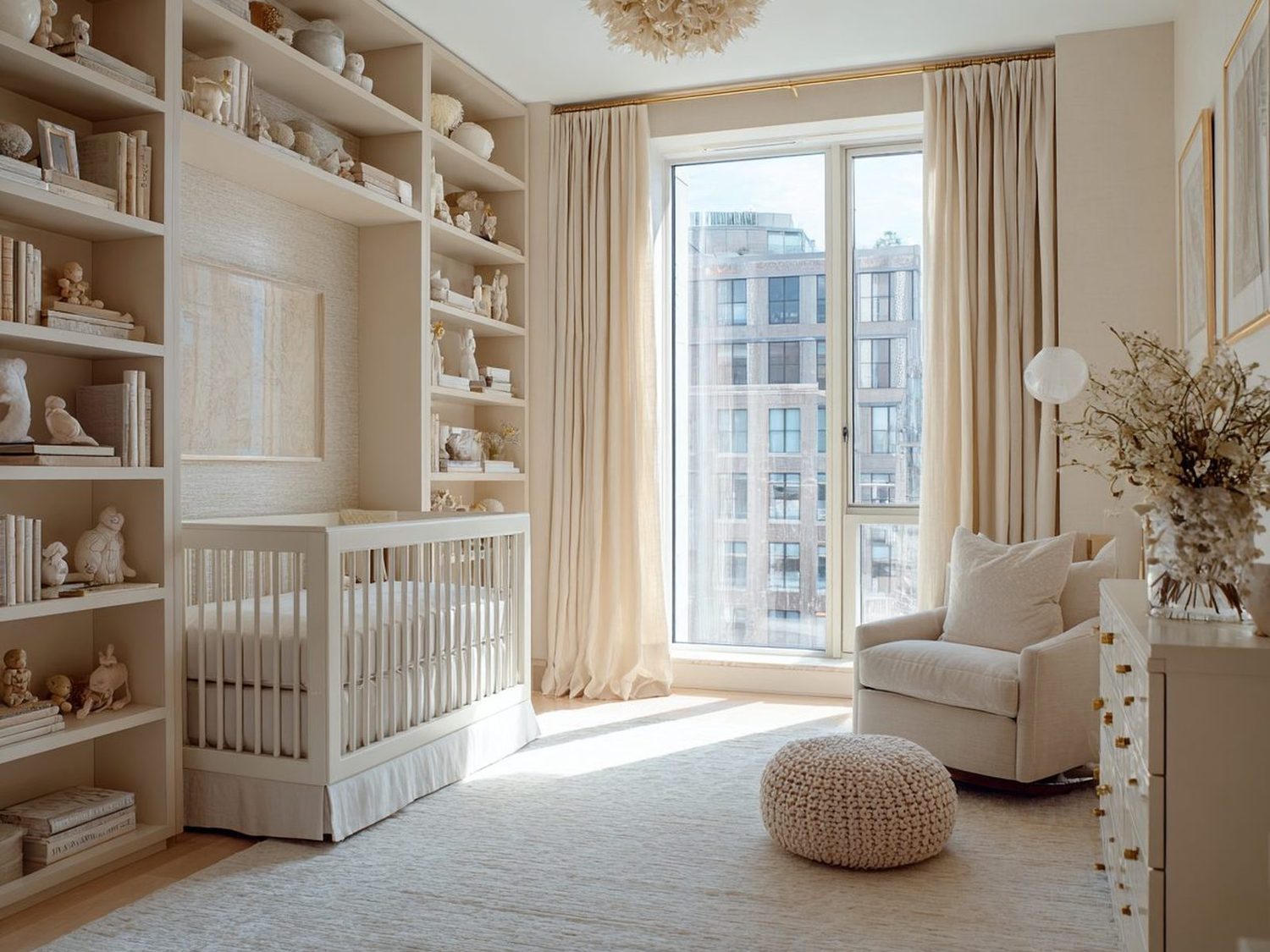
A nursery often starts from a shopping list: cot, changing table, chest of drawers. The result is a room that is full, but not designed. This guide follows the opposite order: design decisions first, furniture afterwards.
Start from the light
Natural light decides where the cot goes: away from direct sun and from the point where early morning light falls on the baby’s face. Before fixing the layout, it is worth observing the room in the morning, at midday and at sunset.
Artificial light needs at least two levels: warm, dimmable ambient light, and a low, shielded light for the night that lets you move around without waking the baby.
Draw the routes
In a nursery you move around a great deal, often in the dark and with the baby in your arms. The route between door, cot and changing table must stay clear: no protruding corners, no rugs that slip.
Cot and changing table stand a few steps apart, and everything needed for changing is within reach of one hand.
Build safety into the design
Corner guards and drawer locks are remedies. Design works earlier: furniture fixed to the wall, no shelves above the cot, sockets away from the sleeping area, curtain cords out of reach, finishes suitable for children.
If the home is being renovated, this is the moment to place sockets and light points where they will be needed: doing it later costs more and is less tidy.
Size the storage
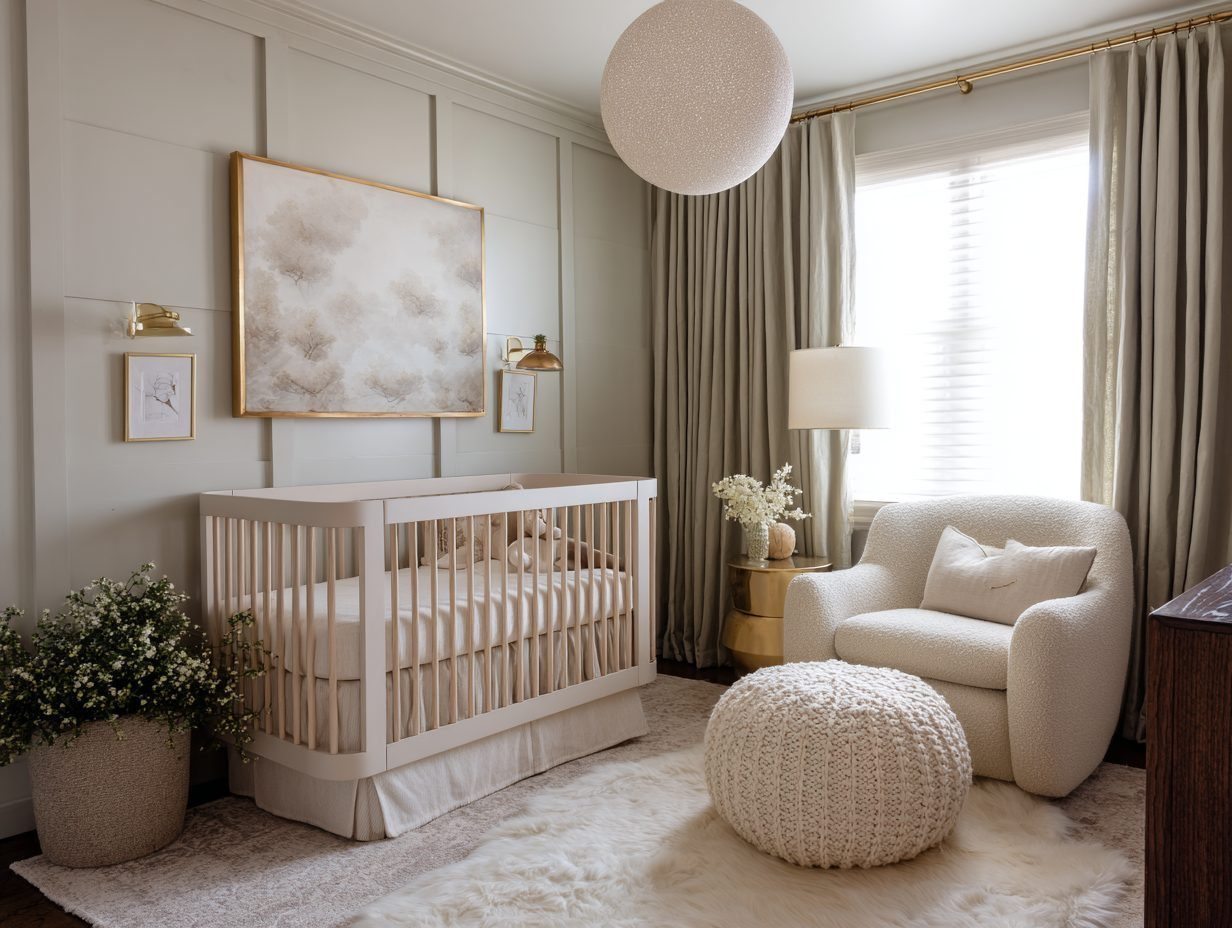
A newborn takes up little space; their things take up a lot. Storage should be sized for what is to come, meaning the next sizes of clothes, toys and books, and designed closed: doors and drawers, with few items on show.
A visually ordered room helps the baby rest and simplifies the day for those who care for them.
Design for the next five years
A nursery designed only for the first months does not last. The cot becomes a bed, the changing table gives way to a chest of drawers, a play area and a reading corner appear.
A good layout plans for these changes from the start: it is the difference between a room that has to be redone and a room that grows with the child.
Choose the style last
Palette and decoration come once the structure works. Neutral, textured bases for walls and main furniture; character is left to what is easy to change: textiles, lamps, wallpaper on a single wall.
This way the room does not date the first time the child grows.
Six decisions, six questions to ask.
Designing a nursery: frequently asked questions.
When is the best time to start designing the nursery?
In the second trimester of pregnancy: there is time for the design, for bespoke furniture and for any building work, without deadlines close to the birth.
How much space does a nursery need?
There is no minimum size. What matters is the position of the cot, changing table and storage and the routes between them: even a small room, or part of the parents’ bedroom, can work if it is designed.
Can the nursery become the child’s bedroom?
Yes, if the layout allows for it from the start. Electrical layout, storage and main furniture are designed to stay; cot and changing table are the elements that change.
Designing a nursery? Let’s talk it through.
Tell us about the place and the idea. We will reply with an initial assessment of the project.
Request a consultation